Table Of Content
Let's switch gears and talk about asymmetrical balance in design. Unlike symmetrical balance, this technique is all about balancing different elements that have equal visual weight. In other words, the left and right sides of your design don't mirror each other, but they still feel balanced.
Practice Makes Perfect
Everything works together and fits together in a seamless whole. The individual parts contribute to their sum but don’t try to become the sum. With this type of balance, elements don’t have to be perfectly symmetrical, but they may end up that way naturally since everything radiates out from one place. Radial balance is when you distribute elements around a single point — usually the center of a composition. Logopoppin is a graphic design agency that specializes in logo designing, web development, video production and advanced branding services. We love to innovate businesses with new age technologies, allowing them to improve their visual reputation.
Master the Art of Balance
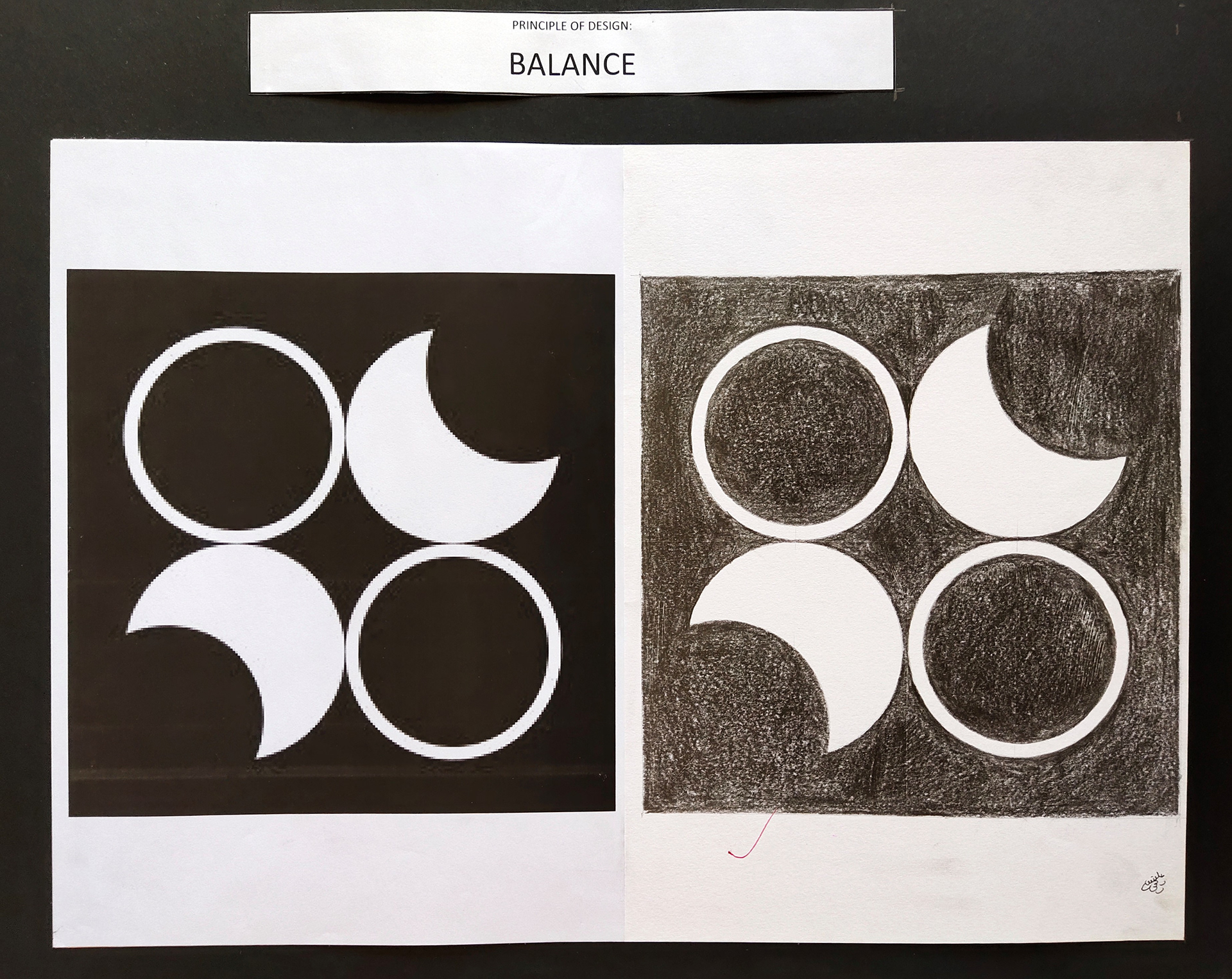
This type of balance is called Mosaic balance or crystallographic balance, where all the elements in a composition, without a focal point, seem chaotic but create balance on their own. No single element shares an emphasis, nor do they dominate the composition as a whole. Similarly, a radial balance is created when all the visual elements radiate from a center point.
Programmable thermostats, lighting, and more
Scale can be used to create a hierarchy for and add emphasis to certain elements on a design. When we’re designing websites, we can make use of a grid for achieving a sense of unity, since elements organised in a grid will follow an orderly arrangement. We do need, however, to introduce some variety in our work in order to strike a balance between a boring and a chaotic design.
Let us explore how balance in graphic design creates equilibrium and how to effectively utilize it to achieve maximum results. In the physical world, objects of the same physical weight will balance each other on a scale. In design, balance refers to the distribution of visual weight. When it comes to color palette and materials, contrast is incredibly important. Rather than embracing a dull gray-on-gray palette, for example, add a pop of graphic black or warm cognac for a visual pop.
This logo design for a life coach offers a visual representation of potential for growth, balance, and heart-centered living capturing the essence of the Client's practice. When you choose colors for your design, you can select complementary, analogous, triadic, or monochromatic colors for the best results. We’ll give you a few examples to understand this idea better. Now, let’s get to the topic – how to use the principle of balance in design to create marketing designs that sell. There are several such cases where symmetrical balance might not be suitable for the intended effect. We're going to explore how scale and proportion play a role in creating a design that's just right.
Creating Balance

Then balance the placement of your subject with an object or subject on the other side of the canvas. This will create a sense of symmetry and balance within a painting. This could be a mirror-like image, or a slight variation of a mirror image.
Learn more about the principles of design
Balance in art is one of the basic principles of design, along with contrast, movement, rhythm, emphasis, pattern, unity, and variety. Balance can be achieved by having symmetry in the design (for instance, having a webpage with centralised text and images). However, you can also achieve balance without symmetry — perhaps unsurprisingly, this is known as asymmetrical balance. We achieve asymmetrical balance when we arrange differently sized elements in a way that results in unity. We can imagine a centre point of the design and distribute the elements in a way that creates balance. Balance in art is a fundamental principle of design and composition.
The logo has overlapping letters C to signify the initials of the logo designer herself, Coco Chanel. The formula of using a variety of design principles makes it a compelling and iconic logo. Despite both squares having the same overall size, color, and contrast, the right square has more visual weight due to it’s perceived density. This example illustrates how white space can play a role in creating balance. Although they differ in physical weight, the image above remains visually balanced because both objects compete for our attention equally. Radial balance is found all throughout the natural and industrial world.
If symmetry was the soothing perfection of the 1950s, asymmetry is more like the off-kilter spirit of the 1960s. Both eras have their own design merits, but there’s something a little more intriguing and refreshing about images that feel a bit off-beat. Remember creating symmetrical “squish” paintings at school?
Although simple, lines can possess a large variety of properties that allow us to convey a range of expressions. Warmer colours such as red, orange or yellow appear to come forward whilst cooler colours such as blue, green and purple recede in an image. A monochromatic color palette is a simple yet sophisticated way to create your next design. Radial balance is also a useful technique that can be employed in interior design.
AURALEE & New Balance's TOKYO DESIGN STUDIO's Latest Collab: A Blend of Vintage & Modern - stupidDOPE.com
AURALEE & New Balance's TOKYO DESIGN STUDIO's Latest Collab: A Blend of Vintage & Modern.
Posted: Mon, 23 Oct 2023 07:00:00 GMT [source]
The result is a strong, perfectly balanced shape, that can stand on its own as well as to be easily adopted by different divisions of the company. My design was selected as a winner from 141 designs entries. Elegant and stylish logo with unique whimsical touch presented in a visually balanced manner. They wanted something cleaner, lighter and modern while keeping the identity of the brand.So I had the idea of a half of a coffee flower and a half of a coffee bean made by a single line.
In the industrial world, radial balance can be seen in almost any type of wheel, which have a clear central point. Symmetrical balance is when both sides of a piece are equal; that is, they are identical or almost identical. This kind of balance creates a sense of order, stability, rationality, solemnity, and formality. Symmetrical balance is often used in institutional architecture (government buildings, libraries, colleges, and universities) and religious art. Most designers also feel that there is a dynamism in asymmetrical balance. When used aptly, this might be that scroll-stopping attribute of your design.
The designer also uses repetition in the shapes and text treatments — paired with a little variety in the colors — to achieve this balance. A somewhat simple way to emphasize specific elements or to add depth to your design is to play with the size of different elements. This brings a visual depth to the overall image, making it have a better impact, while it also is a subtle way to balance the dimensions of various design elements. Another way to give your design a sense of dynamic balance, is to give it a little texture.
This makes understanding the concept of balance in design even more relevant. Of what use will a fancy social media image be, if it does not convey the intended information to the audience? And for images that communicate the intended message, balance in design is a key concept.


No comments:
Post a Comment